I have called this set of images graffiti rather than street art as I don't believe there was an intention to create something artistic. Most of the marks are word based or symbols and would more likely be described as vandalism. This is very different from the art that I photographed in Nottingham a couple of weeks ago.
That said, some of the colours and textures in small sections of the graffiti make intriguing abstract images:
Thursday, 25 May 2017
Wednesday, 24 May 2017
Godrevy Lighthouse - Photography Week 15 (2017)
A return to Cornwall and the National Trust site at Godrevy. It is one of our favourite places to visit in Cornwall with a mixture of spectacular beach views, cliffs walks, seal watching and, of course, photography.
I must have taken hundred of shots in this location in the last year or so, many with the lighthouse in the background. Whilst I try to look for new angles and compositions it is often the lighting conditions which makes each visit unique.
On this occasion it was highlights on sea spray that caught my eye. The sun had just dropped below some heavy cloud sitting over the lighthouse and every time a wave hit the rocks the top of spray moved into the sunlight. A shutter speed of half a second was used to freeze the moment but still get a sense of the sea's movement:
Prior to making these shots we had walked along the cliff path to the Knavocks with many signs of spring along the way including, pink thrift, and primroses on the cliffs looking down into Mutton Cove and towards Godrevy Lighthouse. A herd of seals can also be seen in one of the shots of Mutton Cove:
Back at Godrevy Rocks the sun was struggling behind a bank of thick cloud. One of my favourite views of the lighthouse includes a section of cliff with contorted layers of Devonian mud and sandstone. The extent of the geological folding is particularly evident in direct sunlight:
Where the tides wash over the rocks the sediments form wave-like patterns which are cross-cut veins of quartz. These make interesting abstract shots:
Once the clouds had moved over there was bright sunlight for the rest of the day although the lighthouse remained in shadow due to the angle of the light. To use this creatively, I exposed for a highlight on some mid ground rocks which placed the lighthouse and the rest of rocks into near silhouette. A 10 stop filter helped to even the undulating sea movement and the final image was later converted to black and white:
I must have taken hundred of shots in this location in the last year or so, many with the lighthouse in the background. Whilst I try to look for new angles and compositions it is often the lighting conditions which makes each visit unique.
On this occasion it was highlights on sea spray that caught my eye. The sun had just dropped below some heavy cloud sitting over the lighthouse and every time a wave hit the rocks the top of spray moved into the sunlight. A shutter speed of half a second was used to freeze the moment but still get a sense of the sea's movement:
Prior to making these shots we had walked along the cliff path to the Knavocks with many signs of spring along the way including, pink thrift, and primroses on the cliffs looking down into Mutton Cove and towards Godrevy Lighthouse. A herd of seals can also be seen in one of the shots of Mutton Cove:
Back at Godrevy Rocks the sun was struggling behind a bank of thick cloud. One of my favourite views of the lighthouse includes a section of cliff with contorted layers of Devonian mud and sandstone. The extent of the geological folding is particularly evident in direct sunlight:
Where the tides wash over the rocks the sediments form wave-like patterns which are cross-cut veins of quartz. These make interesting abstract shots:
Once the clouds had moved over there was bright sunlight for the rest of the day although the lighthouse remained in shadow due to the angle of the light. To use this creatively, I exposed for a highlight on some mid ground rocks which placed the lighthouse and the rest of rocks into near silhouette. A 10 stop filter helped to even the undulating sea movement and the final image was later converted to black and white:
Tuesday, 23 May 2017
Hexgreave Estate - Photography Week 15 (2017)
The Southwell Trail, a former railway line, has a branch which connects Farnsfield to Bilsthorpe in Nottinghamshire. In the past the railway would have served Bilsthorpe colliery but today the trail is a nature reserve and leisure walk. A further public footpath allows a circular walk back to Farnsfield via the Hexgreave Estate although crossing the busy A617 is a little challenging.
Part of the return route cuts through farmland and this year's oilseed crop provided the colour for some photography. This was captured in two ways. Firstly, as a distant strip of yellow contrasting with green fields and then close up with the crop in the foreground. The path and tractor tyre tracks were used to provide leads-in lines in some of the shots:
Monday, 22 May 2017
City Canal Reflections - Photography 14 (2017)
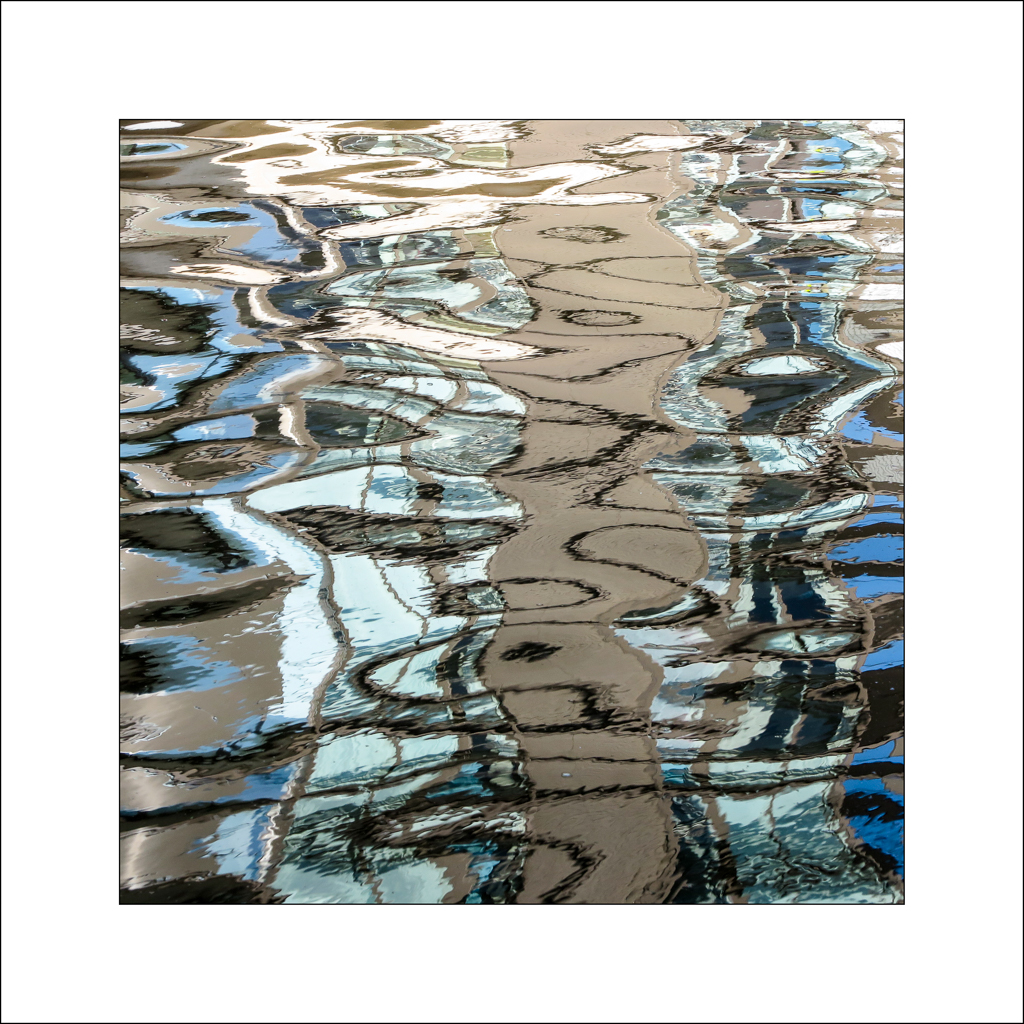
Having captured the vibrant colours of street art in Nottingham (see previous post), my next stop was the city canal. Some of the reflections can be really colourful although it is not immediately obvious at the taking stage or when viewed on the back of the camera.
Image software is needed to cut through the murkiness of the canal water and to bring the images alive. Often an auto adjustment is the quickest and most effective way to achieve this as it artificially creates a new white and black point which increases the overall contrast and brightness.
Of course, image software can't create something that is not there and the final results are better if there is a natural brightness at the point of capture. Searching for bits of reflected colour or natural contrast in the canal is key even if it looks a bit dull to start with. Also important is selecting the a shutter speed to match any movement or ripples in the water. This takes a little playing around with and on this occasion I decided to freeze movement with a shutter speed of 100th of a second:
Image software is needed to cut through the murkiness of the canal water and to bring the images alive. Often an auto adjustment is the quickest and most effective way to achieve this as it artificially creates a new white and black point which increases the overall contrast and brightness.
Of course, image software can't create something that is not there and the final results are better if there is a natural brightness at the point of capture. Searching for bits of reflected colour or natural contrast in the canal is key even if it looks a bit dull to start with. Also important is selecting the a shutter speed to match any movement or ripples in the water. This takes a little playing around with and on this occasion I decided to freeze movement with a shutter speed of 100th of a second:
Labels:
Abstract,
Canal,
Colours,
Nottingham,
Reflections
Location:
Nottingham, UK
Subscribe to:
Posts (Atom)