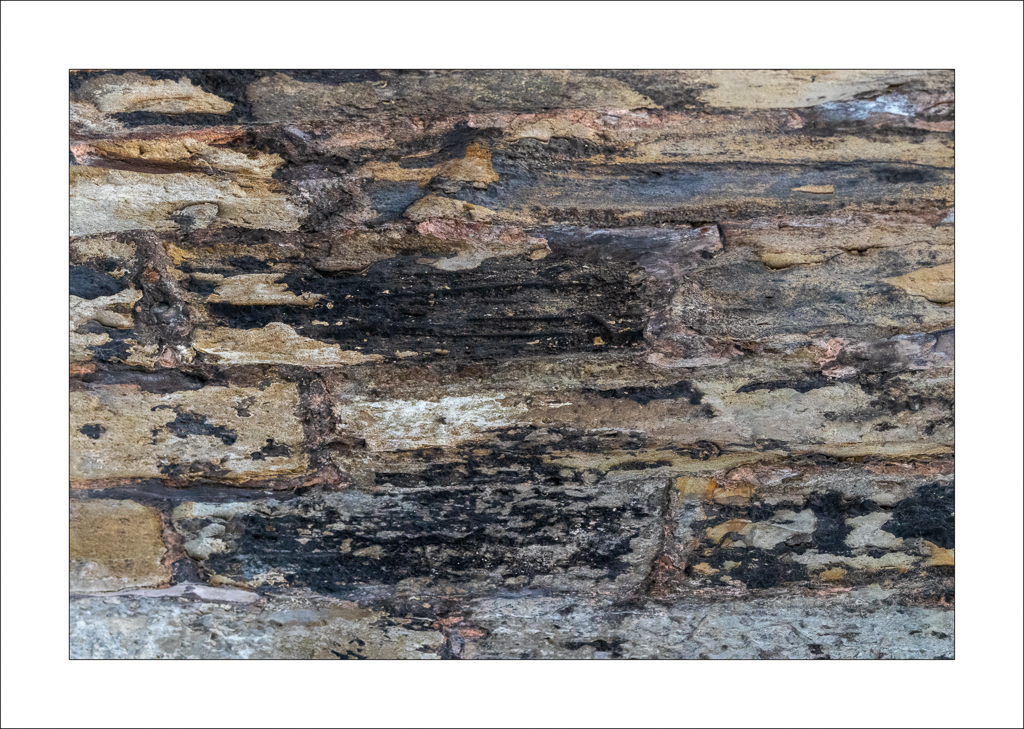
Showing posts with label Sandstone. Show all posts

Thursday, 6 May 2021

Spittal Beach (February 2014) - Part 2

As I mentioned in the previous post I had too many photographs from Spittal Beach to comfortably fit into one post, so I held back a number of square format images which are shown below. 

These were mainly back up shots taken with a compact camera whilst I set up the tripod and DSLR for the main compositions. Many of these went unprocessed in 2014 but the recent lockdown period has given me more time to look back on old photography, often finding a few surprises, which includes the following set. I particularly like the square format and wonder why I ignored the results at the time.

The best answer I can come up with is camera bias and my belief in 2014 that results from compact cameras couldn't match a full frame DSLR with an expensive lens mounted on a tripod. In one way that is true, but in another way images are not stamped with the make and type of camera. If the subject is right and image is sharp then that is good enough for me...7 years after the event! In fact, there are a few in this square format collection that rival some of the images taken with the full DSLR kit. 


To complete the posts from Spittal Beach are a couple of record shots which give some context to the close up studies. The first shows the rocky outcrop, and as I said in the previous Spittal Beach post, I had initially wondered whether I was in the right place. It was only when I looked closely I started to see the colours and patterns and this experience served me well during the time I spent in Cornwall (2015/2017) where rock studies became one of the staple subjects for my photography. 

The other shots below show the incoming tide flushing through the sandstone giving an insight into the process of erosion that continues to shape these rocks.


Monday, 3 May 2021

Spittal Beach (February 2014) - Part 1

In the last post from the 2014 Northumberland series, I posed the question about bad weather and photography in coastal location. Being February there was always going to be some dull or rainy days and actually I had been very fortunate to experience good landscaping conditions up to this point. 

My preparation for bad weather before leaving home was a visit to Spittal Beach. I had seen from other photographers some excellent close-ups of a sandstone outcrop and thought these might be best captured in flat lighting. 

I wasn’t totally sure what to expect when I went searching for this outcrop, initially wondering whether I was in the right place. It was only when I looked closely that I started to see a myriad of different patterns and colours and in between rain breaks spent the rest of the day immersed in the subject. 

I remember spending a lot of time setting up the tripod, trying to get a level on an uneven surface, wondering about depth of field, considering focus stacking and all sorts. I was very keen not to fail technically. 
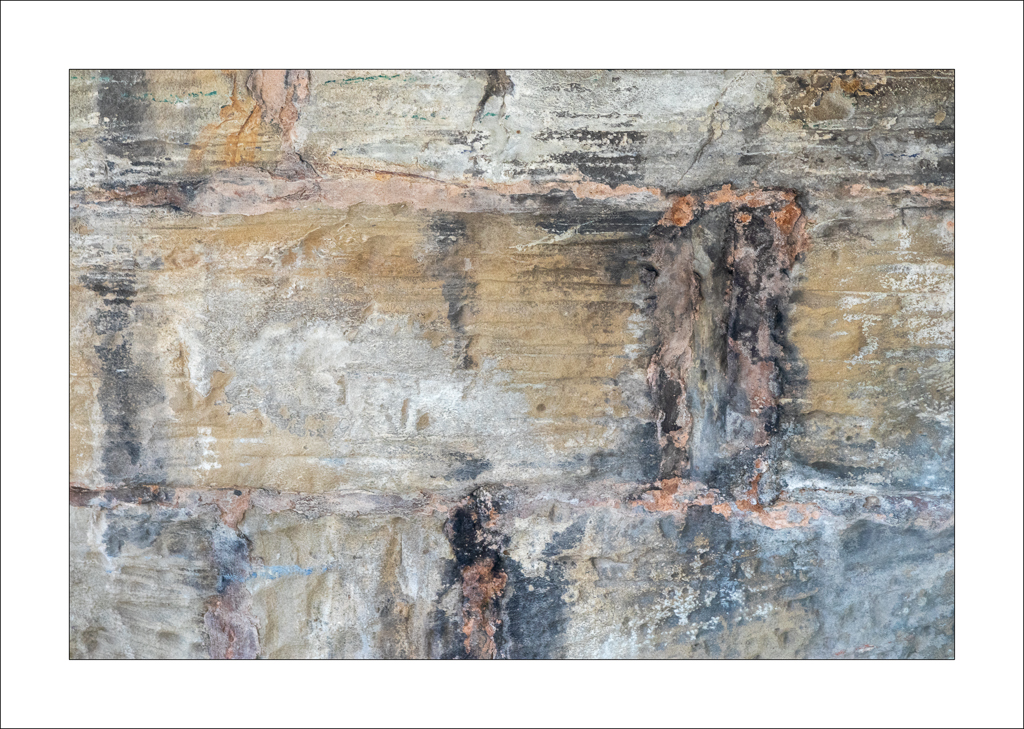
In the background, I was also backing up and testing compositions on a compact camera. It was easier to handhold, see the composition on the screen, and then set up the main camera - a process that meant I had hundreds of images when I returned home and most of the compact camera shots were never processed... until now. 

With all the images now in a Lightroom collection it is not obvious which image was taken with which camera, except for some square format shots which I definitely took with the compact camera. I am therefore happy to treat each photo on its merits and, as there isn't room to show all the results, I have picked out some for this post whilst holding back the square format shots for part two:


Friday, 17 April 2020

Meadow Lane Bridge

After a diversion into some of my artwork, see my previous post, I am back to some pre-lockdown abstract photography. This time it is the colours and textures of the old Meadow Lane Bridge on the canal in Nottingham. I believe the bridge is a sandstone construction although I can't find a reference to confirm this. Given the likely age of the bridge and geology of Nottingham it would be a fair assumption though.

These are some of the results: