The following selection of photographs is a continuation of the photography on day 2 at Burnham-on-Sea. They feature close-ups of two wooden boats sitting high and out of the water on the opposite side of the river.
Guessing that there would be a way to cross the river, these boats became the final photographic target on the morning. Wooden boats are always great value for surface and texture images including weathered planks, peeling paint, rusting nails and a variety of colours and tones.
When I arrived at the boats the ground was wet and muddy. It was hard to get close, particularly to the small boat, but I did manage to take some photographs. These were some of the results:
Showing posts with label Somerset. Show all posts
Thursday, 19 March 2020
Wednesday, 18 March 2020
Burnham-on-Sea - Day 2 - Part 2 (February 2020)
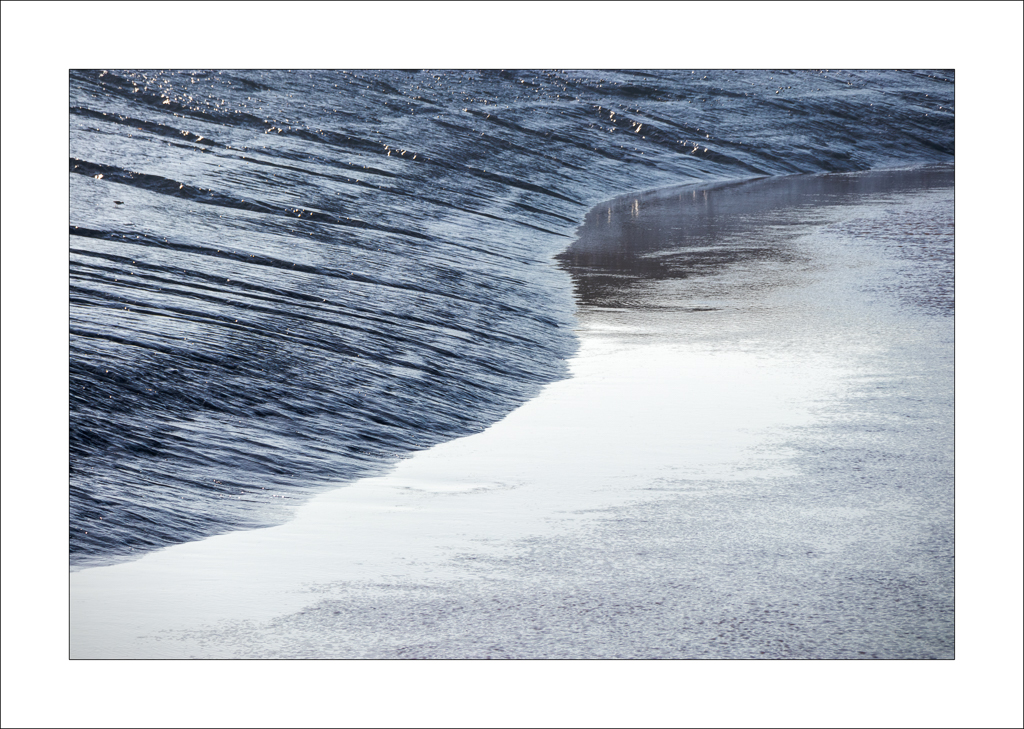
The theme for this second selection from day 2 at Burnham-on-Sea is the mud banks of the River Brue at low tide. It might seem like an odd subject but I was attracted to the curves of the river, the textures of the mud, the light shining off the wet surface, and the variations in colour and tone.
The results range from abstract studies to wider landscape views. The abstracts attempt to remove as much context as possible to emphasize the elements listed above. Gradually, the context is reintroduced to give more of a sense of place e.g. introducing the buoys sat on the mud, a bench on the bank, some distant boats, and views of the river mouth as it empties into Bridgewater Bay.
Although I don't consciously apply a step-by-step process when taking photographs, I do recognise adding and removing context as a useful way to explore a location. If I were to state the stages they would be: pick out the defining themes of the location; list the elements which make that theme visually interesting or attractive; record these elements in detail; and then gradually introduce more of the setting.
Looking back over much of my early photography, I can see that I was trying to apply that process in reverse. I was frequently trying to put all the features and visually attractive elements into one frame, often looking for ways to add more, when the real solution was taking elements out and being more selective.
I once read that composition is decision about what to leave out rather than what to put into a photograph. At the time I didn't fully appreciate this comment, and now I can't find the reference, but it definitely makes sense today and the measure of that is picking 'mud' as a photographic theme!
The results range from abstract studies to wider landscape views. The abstracts attempt to remove as much context as possible to emphasize the elements listed above. Gradually, the context is reintroduced to give more of a sense of place e.g. introducing the buoys sat on the mud, a bench on the bank, some distant boats, and views of the river mouth as it empties into Bridgewater Bay.
Although I don't consciously apply a step-by-step process when taking photographs, I do recognise adding and removing context as a useful way to explore a location. If I were to state the stages they would be: pick out the defining themes of the location; list the elements which make that theme visually interesting or attractive; record these elements in detail; and then gradually introduce more of the setting.
Looking back over much of my early photography, I can see that I was trying to apply that process in reverse. I was frequently trying to put all the features and visually attractive elements into one frame, often looking for ways to add more, when the real solution was taking elements out and being more selective.
I once read that composition is decision about what to leave out rather than what to put into a photograph. At the time I didn't fully appreciate this comment, and now I can't find the reference, but it definitely makes sense today and the measure of that is picking 'mud' as a photographic theme!
Saturday, 14 March 2020
Burnham-on-Sea - Day 2 (February 2020)
On the second day at Burnham-on-Sea I resisted the temptation to get up for another dawn session. I wasn't a hard decision!
Instead, I planned a leisurely post breakfast walk from the seafront in Burnham along the River Brue towards Highbridge. There was no particular photography plan on this occasion and I simply reacted to any subject that caught my eye.
As it turned out, there was plenty to photograph and too much to comfortably fit into one post. I have therefore split the content and will present these in a series of posts, starting here with images of the sea wall and some of the boats on the river.
The seawall in Burnham stops at the mouth of the River Brue. It is a visually interesting structure, curved outwards to repel the tide with a series of wide steps down to the beach:
Looking out from the seafront, across Bridgwater Bay, I noticed how one particular sand bank, which I think is Stert Island, seemed to attract the morning light:
This next set of images shows the River Brue at low tide and the various boats stranded on the shiny mud banks, some at oblique angles. I started alternating between abstract shots of the mud, which I will show in the next post, and images of boats. I had one eye on potential subjects for my watercolour painting and even made a few brief sketches. Interestingly though, I found it hard to concentrate on photography and art at the same time....one seemed to interfere with the other. I think this has something to do with visual focus: what makes a good photographic subject doesn’t necessarily translate into art and visa-versa. In the end, I settled for just the photography and deferred the art to the following day.
Instead, I planned a leisurely post breakfast walk from the seafront in Burnham along the River Brue towards Highbridge. There was no particular photography plan on this occasion and I simply reacted to any subject that caught my eye.
As it turned out, there was plenty to photograph and too much to comfortably fit into one post. I have therefore split the content and will present these in a series of posts, starting here with images of the sea wall and some of the boats on the river.
The seawall in Burnham stops at the mouth of the River Brue. It is a visually interesting structure, curved outwards to repel the tide with a series of wide steps down to the beach:
Looking out from the seafront, across Bridgwater Bay, I noticed how one particular sand bank, which I think is Stert Island, seemed to attract the morning light:
This next set of images shows the River Brue at low tide and the various boats stranded on the shiny mud banks, some at oblique angles. I started alternating between abstract shots of the mud, which I will show in the next post, and images of boats. I had one eye on potential subjects for my watercolour painting and even made a few brief sketches. Interestingly though, I found it hard to concentrate on photography and art at the same time....one seemed to interfere with the other. I think this has something to do with visual focus: what makes a good photographic subject doesn’t necessarily translate into art and visa-versa. In the end, I settled for just the photography and deferred the art to the following day.
Labels:
Boats,
Burnham-on-Sea,
Mud,
River Brue,
Somerset,
Water
Location:
Burnham-on-Sea, UK
Subscribe to:
Posts (Atom)