Friday, 25 September 2015

Falmouth

A visit to Cornwall was an ideal opportunity for some landscape / seascape photography. My principle target was St Michael's Mount, a well photographed location but one that I had not visited before.

The aim was to get to Marazion (and St Michael Mount) for the evening golden hour and then, depending on the weather, for dawn the following day. With the best part of the day to wait for the evening light we visited the picturesque town of Falmouth followed by Land's end.

These are some of the results from Falmouth with Land's End and St Michael's Mount covered in separate posts.

Harbour


Chains


Morgawr (Bronze Age Replica Boat) & Maritime Museum


Falmouth Docks

Pendennis Rise gives a high view of the dock area and the town of Falmouth. Across the inner harbour a farmer was applying a harrow to the land.


Abstracts


Sunday, 20 September 2015

Photography Week 38 - Wildflowers and Landscapes

Photography week 38 is covered in two parts: surfaces and textures in a previous post and wildflowers and landscapes in this post.

Wildflowers

Over the summer I have been documenting the wildflowers on the Southwell Trail. The Southwell Trail was previously a railway line that connected Rolleston (via Southwell) to Mansfield between 1871 and 1968 although passenger trains stopped in the 1920s. The trail was then purchased by the County Council in the 1970s and is now a nature reserve used by walkers and cyclists.


The Friends of the Southwell Trail survey the wildflowers on an annual basis and I have joined their survey on a couple of occasions over the summer. These are some of the results from this week:

Field Pansy


Common Toadflax


Field Scabious


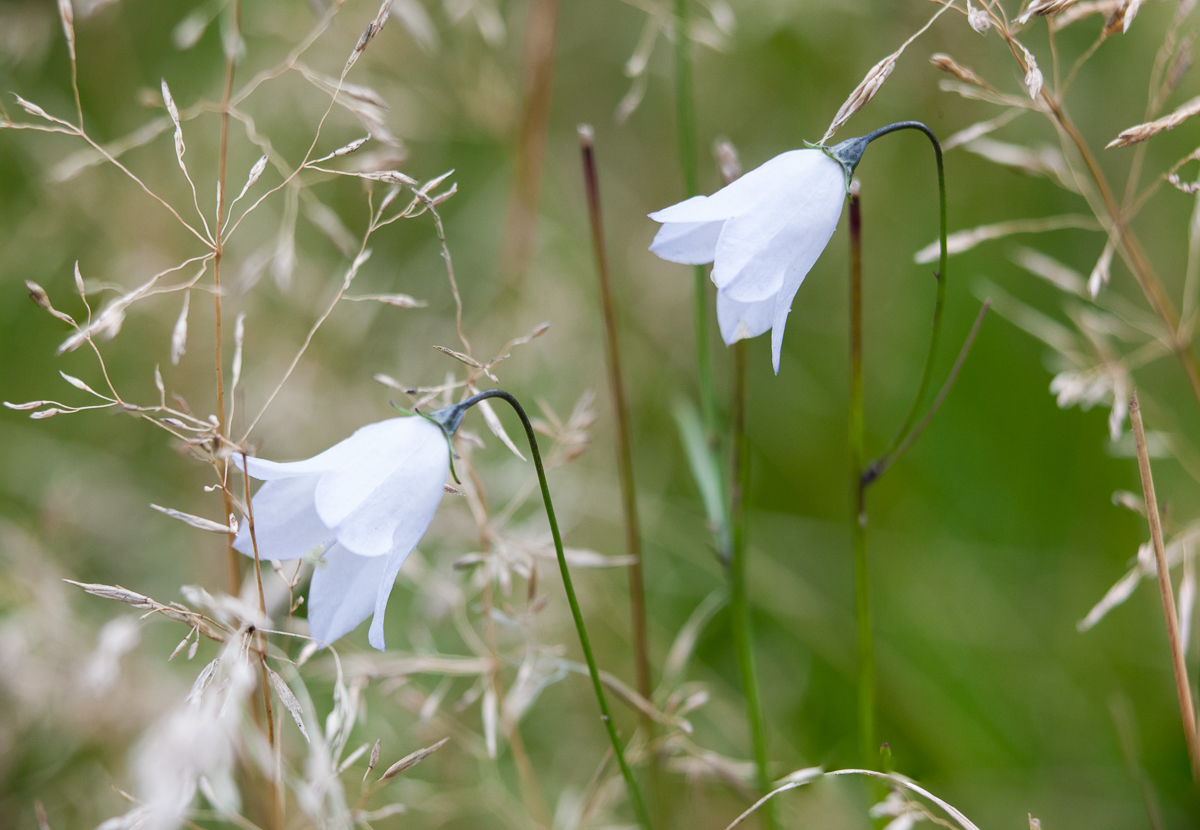
White Harebells


St. John's Wort


Mayweed


N.B. I try hard to identify each wildflower correctly however with so many variations mistakes are inevitable!

Landscapes

The local fields are starting to look autumnal. These shots were taken with a telephoto lens. For the second shot I focused on the light in mid foreground with a narrow depth of field. This has the effect of softening the building and trees and fields in the background. Whilst this is unconventional in a landscape I think it adds atmosphere to the image:


Photography Week 38 - Surfaces and Textures

Week 38 is in two parts - surfaces and textures in this post and wildflowers and landscapes covered separately.

Surfaces and textures are an interesting theme in photography. They are all around us yet mostly go unnoticed in any detail. From a photographic perspective they are integral in developing the art of seeing.

I don't really want to get too philosophical about photography and art as I don't know enough to make an informed comment. My experience of developing seeing through photography simply comes from a desire to not only to look more but to actively get involved with a subject in order to create a digital representation. When the subjects become more numerous and perhaps obscure I know that I am making progress. This week's pictures are a good illustration of this!

The Path

There are many footpaths close to home that cross agricultural fields. Over the summer the surface has dried out and cracked around stones that have become imbedded. These are a few of compositions I created:


Gravestones

Lichen on old gravestones provide an array of patterns and textures. I think it is important to be very respectful to people's resting places and I hope that sensitively captured images don't cause any offence:


Plastic

Plastics don't have a great reputation for aesthetic appeal. The reality of covering straw or hay bales in a plastic film seems to remove the aesthetic appeal of the bale but for the second time this summer I have photographed the covering as a textured surface:


Leaves on Water 

The fallen leaves create a textured surface on the water:


Sunday, 13 September 2015

Photography Week 37

I try to take one photograph every day whether it is with a full DSLR kit, a compact camera or a phone camera. Many of these shots are simply records of the day - things that might catch my eye or interest me. Providing a place to show some of these photos was the initial purpose of this blog but many do not work as stand alone images and need a context. Grouping them by calendar week will hopefully provide this context and give a sense of my photographic themes.

Starting with Photography week 37 (7th to 13th September) I have already posted photographs from Higger Tor in the Peak District and Sherwood Forest. These are some of the other images from this week:

Wildflowers

Whilst out walking I came across a snowberry bush growing wild - not that I knew its name when taking the photograph. Apparently, snowberries are not native to the UK and were introduced from North and Central America:


In addition to the photographs of heather in Sherwood Forest I took a series of shots of hawkweed flowers and seed heads using the heather colour as a background. There are many variations of hawkweed which are difficult to identify but the lack of stem hair suggests that I was photographing the leafy hawkweed (Hieracium umbellatum).

Hawkweed is part of the wider daisy family and like a few species in this family it is a composite flower  made up of numerous individual flowers - in other words what looks like a petal is actually and individual flower or floret. Each floret has five fused petals and five anthers around the style with a forked stigma:


Also taken in Sherwood was this photo of ragwort in the long grass:


Cultivated Flowers

I am not sure that I have used the right heading for the next shots but I wanted to distinguish between flowers growing wild and flowers grown for a purpose.

I came across a strip of land in a field which included sunflowers and a lavender coloured plant which I later identified as scorpion weed. I think these are planted as an aid for pollination. Scorpion weed is very good at attracting insects especially bees. In addition, it is grown as a green manure - plants that are ploughed back into the land as a fertiliser.


Landscapes

Two landscapes this week both of local fields. The first is a field with a small hawthorn tree on the horizon which is good for making compositions particularly when the field has been ploughed in lines or, as in this case, straw has been left in lines. I have seen this particular tree and field feature a number of times on photographic websites over the years.


The second is more of a record of the weather conditions as the image lacks foreground interest. That said I like taking and looking at big sky pictures.

Wednesday, 9 September 2015

Budby South Forest

Budby South Forest is an area of open uncultivated heathland in Sherwood Forest and this time of year the heather colour is stunning.


I was aware from previous visits that the open landscape is difficult to photograph with a wide angle lens so I decided to use a 100-400mm telephoto lens for all the shots. This worked particularly well when there was a break in the cloud and some shafts of sunlight:


The long lens also provided an opportunity to be creative with the point of focus and the depth of field:


At 400mm it is possible to pick out compositions with colour that would be lost with a smaller focal length.